Thursday, December 17, 2009

What Is Your Body Mass Index?

Body Mass Index

is sometimes abbreviated to be called your BMI. Your Body Mass Index is a number that results from a mathematical calculation that is based on how much you weigh as well as how tall you are. To figure out your Body Mass Index, you can do the following calculation (you can also use a chart found at one of the links found at the end of this article):

  • Multiply your weight in pounds by 703.
  • Divide the answer by your height in inches.
  • Divide the answer by your height in inches again.

So, for example, if someone weighs 163 pounds and is five foot two inches (62 total inches), that will look like this:

163 x 703 = 114,589

then you take that total and divide it by your height, in inches:

114,589 / 62 = 1848.2

In this example I rounded the answer to the nearest tenth for convenience. Then, that total gets divided by your height in inches one more time:

1848.2 / 62 = 29.8

So, in this case, the answer is 29.8. This is the Body Mass Index. Find your number in the chart below and you'll see where, according to your Body Mass Index, you are, health-wise.

  • Underweight: BMI is below 18.5
  • Healthy weight: BMI is between 18.5 and 24.9
  • Overweight: BMI is between 25 and 29.9
  • Obese: BMI is between 30 and 39.9
  • Morbidly obese: BMI is 40 or greater

While you can find your Body Mass Index fairly easily, there are a few things you'll need to know if you're going to use it as a basis for weight loss or gain. First of all, it doesn't take into account whether you have an "unusual" build. For example, a senior citizen may have lost muscle mass, so his or her weight would need to be adjusted for that loss. An athlete may have more muscle than the average person for whom this formula was created. In that case, that person's body weight would need to be higher than what is estimated here for that person to be healthy.

Calculating the BMI in this way is also to be used for adults only. It is best to talk to your doctor about how much your child should weigh, as often their advice will be to keep them from gaining any more weight and let them grow into their heft.

Credit: http://beauty.tips.net/

Ways to Combat Body Odor

An entire industry has grown up around making us smell good and telling us that our body odor is "bad." It is important to realize that every person has a distinctive smell; this is normal. The smell is caused primarily by our sweat—as we perspire, our perspiration gives off an odor. This odor only becomes a problem when the smell is offensive to others.

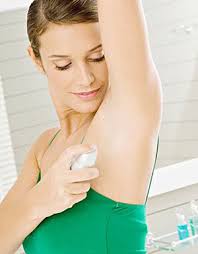
If you sweat and the perspiration cannot evaporate freely, it is possible for bacteria to grow in the moisture. This accumulation of sweat—and associated bacteria—in areas such as the armpits, groin, and feet can cause a particularly pungent or offensive odor. The best remedy is to bathe or shower frequently and change into clean clothes regularly.

If you feel self-conscious about your smell, you could try a deodorant. This doesn't stop you from sweating, but it can disguise the smell. Some people also try other masking agents, such as perfume or cologne.

If you perspire heavily you could use an antiperspirant, which actually blocks the production of perspiration. Antiperspirants work by drying out the sweat glands and reduceing the amount of sweat they produce. You should never use a deodorant or antiperspirant on broken or inflamed skin, as this could cause problems with healing or make rashes worse.

There is no need for women to use a vaginal deodorant, and indeed these can cause irritations. Daily washing with soap and water should be sufficient. However, if you find the smell offensive, or if there is a heavy discharge, see your doctor you may have a yeast infection or some other type of infection.

If your feet smell, this is probably because the shoes you are wearing are not allowing the sweat to evaporate. Avoid shoes made of synthetic materials and those with synthetic linings. Wear socks made from pure cotton, as they can help "wick" the water away from your body where it can naturally evaporate. Women should look for hosiery that allows your skin to "breathe" and air to circulate properly. Wash your feet several times during the day and dry them thoroughly. You could also sprinkle foot powder or talc on your feet before putting on your socks and shoes.

Credit: http://beauty.tips.net/
Understanding a Spring Person

I hate it when I find a top that is so cute, it fits, it's inexpensive, but it doesn't look good. I hate that. How is it that the same top can look amazing on my sister, but look like a disaster on me? The answer is in the fact that the combination of skin tone, hair color, and eye color all contribute to our own personal color palette. Experts categorize these color palettes into the four seasons. In theory you are a spring person, a summer person, a fall or winter person. Your "season" can best determine what looks good on you. While spring is many people's favorite season, it may not be their most flattering palette.

Springs have warm colors that are bright and intense. Their color palettes are founded in colors with warm, golden-yellow undertones. Spring colors are "warm," meaning they are complimented by yellows and golds. They don't look too hot in a stark white, but rather go for the off whites and creams. They look best in brighter colors, but not too intense colors.

Browns can look great on Springs as long as it stays more golden than sepia, more chocolate than an earthy brown. Spring colors are clear and vibrant, the color palette ranging from purple to coral to azure. Springs can wear black, but should wear it with other popping Spring colors. Gold jewelry looks best on a Spring, emphasizing the "warm" tones as opposed to the cooler silver options.

Traits characteristic of Springs are blond, chestnut, or dark brown hair

complemented by a naturally flushed or pinkish-golden skin tone. To set off the true Spring look, most Springs have eyes that are an intense shade of blue (like an aqua or sea green), but can also have golden brown or amber eyes. Spring is the most uncommon of the season color palettes and only springs can pull off certain colors (e.g. a vibrant grassy green).

While we all may love spring and all the beautiful flowers and blossoming growth, the fact is we don't all look great wearing those energetic colors. So even though you may be disappointed with the reality that that bright coral blouse just doesn't work for you, rest assured there are other colors (in the same blouse I'm sure) that will set you apart from the crowd!

Credit: http://beauty.tips.net/


How to Look Taller

I, like many others I know, am not tall. I stopped growing in about the eighth grade and if my jeans hadn't frayed and there was some way to keep my stick-thin fourteen-year-old body, I could still wear the jeans I wore six years ago. The hiking boots I got in sixth grade still fit and in short, I'm just not tall. I think I'm average short—not so noticeable short, but no one is telling me "wow, you're pretty tall" either. Despite being vertically challenged, I've found many ways to create optical height illusions.

When you're at the shorter end of the height stick, it's not hard to move up to the other end. The primary way is through shoes (which are always fun!), however use discretion when selecting tall shoes

. You want them to be high enough so it actually makes a difference, but you don't want them to look trampy or be completely useless for everyday activities (like walking). This is where taste comes into play—you have to make the call. You probably don't want to opt for heels higher than three-and-a-half or four inches. First they would be really hard to walk in and second, the risk of looking too "streetwalker" is higher. You'll only want to wear the highest shoes on special evening occasions.

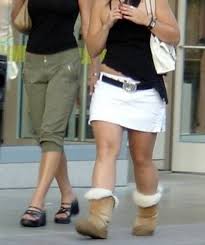
You can also use your clothes to make you look taller. I've found that for casual occasions, wearing a nice dark wash boot-cut jean with a good heel really elongates the leg and definitely makes you look taller than you are. Apart from the heel, the long, slightly flared pant leg stretches your legs and makes you look like you have more legs than you actually have.

For more a more professional setting, long dress pants with a slight boot-cut over nice dress shoes succeed in giving you height. You sometimes have to be careful with dress boot-cut pants, though, because you don't want the pants to have too much of a flare. A better way to go with business-wear is with a straight, wide-leg pant with perhaps a pinstripe to really accentuate the length of the leg. If you want to wear a skirt, choose a knee-length one and wear it with cute heels. With high heels and bare legs you'll look super cute and look sophisticatedly tall!

The short people of the world are in a good place I believe. They can be short if they so desire, but if on a day when they need some height to give them fuel, they can be tall. With simple solutions to toggling between short and tall the possibilities are virtually limitless to different styles, outfits, and looks!

You can find a video for this tip by visiting this tip: How to Look Taller - Video

Credit: http://beauty.tips.net/
How to Look Shorter

I love tall men. I think that height is highly attractive and that works for me because I'm on the shorter end for women. However, not all women are 5 feet 4 inches tall and don't have as much wiggle room when it comes to fiddling around with their height. One of my girlfriends is 5'9" and is all legs. (Now long legs are always good!) Aside from the fact that she has a hard time finding jeans that are long enough, sometimes she just doesn't want to be tall. The question of how to look shorter is a bit more difficult than that of how to look taller, but rest assured, there are a few eye-deceiving methods.

If you don't want to look tall then don't draw attention to your height. Don't wear super-high shoes, for instance, since they accentuate your height. Another effective way to "reduce" your height is to wear jeans (usually some form of a boot-cut style) with really flat shoes. You'll find that you look shorter when you cut the visual line of your leg off like that. Jeans with either flip flops, flats, or another shoe of the same type is very effective in making you appear shorter. You can also wear longer tops to cut off the lower half of your body, but I don't know how effective that would be given that your torso would then be elongated.

Honestly, there aren't too many options for making yourself look shorter. Perhaps the best way to handle this situation is to build your confidence. A lot of this is mental rather than physical—it's all in the attitude. If you slouch, regardless of whether you're tall or short, it looks sloppy and emits a negative feel. Rule one: don't slouch! Walk with poise and self-assurance, letting everyone know through your posture that you know who you are and what you want. You don't have to emphasize your height if you don't want to, but you don't need to hide it either.

Remember: height isn't bad. It can be slimming and many people find it attractive. Sometimes you just can't do much with being tall—it's one of those things you can't do much about, so instead of doing something about it, do something with it! Even though your height may be the first thing people notice, you have the power to make it so it's not the last thing they notice.

Credit: http://beauty.tips.net/

Effects of Body Piercing

Putting a piercing in an adult body of any size opens it up to the chance of infection. And even though your piercing heals, it will always be susceptible to infections because it is an unnatural hole in the body. The most common infections that are cited as being contracted from insufficiently disinfected piercing instruments are those of hepatitis (which causes liver damage) and HIV (which causes AIDS), as well as tetanus, bacteria, and yeast. And, as a side note, do not let anyone do any of your body piercings with a piercing "gun" of any kind, as these instruments cannot be disinfected.

Other risks: oral complications resulting from tongue piercings, such as chipped and broken teeth, choking on loose jewelry, speech impediments, and swollen, infected tongues; nerve damage (leading to permanent numbness in the area pierced); keloids (thick scars at the point of piercing); allergic reactions to the jewelry used to keep the wound open; the formation of deep cysts (which is a sac filled with fluid or semi-fluid matter); and other possible ill effects.

The other effect of body piercing is healing time, and here it is, by each area pierced:

  • Ear cartilage: Four months to one year
  • Ear lobe: Six to eight weeks
  • Eyebrow: Six to eight weeks
  • Female genitalia: Four to ten weeks
  • Lip: Two to three months
  • Male genitalia: Four weeks to six months
  • Nasal bridge: Eight to ten weeks
  • Nasal septum: Six to eight months
  • Navel: Four months to one year
  • Nipple: Three to six months
  • Nostril: Two to four months
  • Tongue: Four weeks

Creating a Healthy Glow

Ever wonder how to achieve that so-called healthy glow praised in all your favorite check-out lane magazines? What does it even mean? And is the healthy glow possible for the normal person, or is it just one of those Hollywood gimmicks that only those with seven-digit salaries can afford? Here's the low-down on the "healthy glow": it is achievable for you, and it doesn't require any massive spending of money you don't have. Depending on how you choose to approach the healthy glow, it may not require spending any money at all, because the healthy glow has everything to do with lifestyle and nothing to do with surgeries or cosmetics.

The healthy-glow look has two components: the physical component and the life choices component. The physical component obviously has to do with your body and how you treat it. Do you exercise? Do you eat well? You can't have a healthy glow if your body isn't healthy to begin with. I've never been too athletically inclined, and if you're like me, the prospect of exercising fills you with dread; however, what is important is that you start exercising. After a while, the exercising will get easier, and you'll get healthier. If you're not sure how to exercise or what would be best for your body, then consult a personal trainer or your primary physician if you have significant medical concerns.

Eating well doesn't mean that you have to be a health nut; healthy eating

is not my primary concern, but I also don't want to eat poorly. You can still eat healthy without going completely organic or green. Make sure to have distinct meals every day (avoid too much snacking, because when you snack you tend to eat things that aren't so healthy for you). Eat fruits and vegetables and not too much sugar. Listen to your body—it will tell you when it doesn't feel well and when it could use a diet adjustment. Your body will tell you how to achieve your healthy glow!

The second component to creating a healthy glow takes more effort and time: life choices. Sure your body may be happy, but if you want to glow, you need to be happy. That sounds like a tall order. If this aspect of your life needs some work, then take the plunge and start making adjustments now. Take stock of your life and lifestyle and pinpoint the aspects you're unhappy with. Start with changing what you can (and changing your attitude is almost always something you can change!). This second component of creating a healthy glow is so personal that you'll have to take the time to evaluate your life. One article can't tell you the roadmap to happiness, but contentment is a crucial part of creating a healthy glow. It's the glow part of healthy glow!

Creating a healthy glow results in a happier life and a more attractive you. Take the steps today to start creating your own healthy glow!

Credit: http://beauty.tips.net/

Body Soaps

Body soaps come in many shapes, sizes, scents, and types. It seems that there is a specific soap made for every skin type you could think of, and with so many scents that it might be a little overwhelming deciding which is right for you.

It's true that there are a lot of options out there, but a little research will help you discover what soap is perfect for your skin. Which soap you will want to use can depend on your skin type and other factors, such as your health. For instance, if you have a particular skin condition, there are soaps that will work much better for you than others.

So what kinds of soap are out there? First, here are the basic types of soap you can find:

  • Bar Soap. Bar soap comes in a solid form. After contact with water, this soap can easily be lathered and applied to the body. This popular soap form has been around for a long time, and is still preferred by many.
  • Liquid Soap/Body Wash. This is soap that you can find in liquid form, in a bottle. Because it is already a liquid, this soap can be spread easily over the body in a loofah. sponge, washcloth, or by hand.

There are varieties of both bar and liquid soaps, including:

  • Moisturizing. Moisturizing soaps are good for people with very dry skin. These soaps allow the body to hold on to moisture and stay soft and healthy. If your skin is already pretty moisturized, you will probably do fine with regular soap.
  • Antibacterial. Many people worry about exposure to bacteria. Antibacterial soaps help kill bacteria on skin and leave you feeling clean. There are, however, worries over whether over-using antibacterial products can be more harmful than helpful.
  • Scrub. It is a good idea to exfoliate dead skin from time to time so that your skin can be at its softest. Using a body soap that acts as a scrub is one way to get rid of dead skin cells and leave you with fresh, soft skin.
  • Medicated. Some soaps have medication added that can help with various skin conditions. For instance, there are soaps made to help prevent and heal acne on the body, soothe dry skin conditions such as Eczema, or give relief to those dealing from Chicken Pox.

Choose a soap that is right for your skin type, and you will leave the shower feeling clean and renewed.

Credit: http://beauty.tips.net/

Body Sculpting Made Easy

The term "lifting weights" carries with it a very masculine connotation, one many women shy away from, wanting to preserve their identifying femininity. When a man says he lifts weights, images of six pack abs, rock hard arms, and the firefighter calendar surface, so culturally, muscular physique is associated with men—you don't see too many women boasting of melon-sized muscles.
The fact is, however, most women don't have the physical capability to develop those kinds of muscles. Weightlifting doesn't have the same effect on the fairer sex that it does on men. Muscles like the ones found on "Baywatch" take significant amounts of testosterone (and perhaps even more than that) and women just don't naturally have that. Regardless of whether women don't lift weights because they think it's for men or they refrain for fear of growing muscularly huge, the fact remains that weightlifting for women, more commonly referred to as body sculpting, is actually very healthy and beneficial.

Body sculpting is a tried-and-proven way to reshape your body and give it healthy tone. While working out won't turn fat into muscle and vice versa, body sculpting can burn fat and increase muscle. Keeping your body in muscular shape will also bode well for your physical future; maintaining a toned body will hinder fat gain and greater prevent loss of strength. Body sculpting also aids in the prevention of osteoporosis by keeping the bones strong. Granted, body sculpting won't necessarily result in weight loss because muscle actually weighs more than fat. Despite what the scale may say muscle weight slims the body as opposed to fatty weight, which is not so slimming.

Getting into weightlifting isn't that difficult actually and in my experience, the results come quick! You don't even have to go to a gym if you don't want to (a prospect which always deters me); you can buy a few sets of dumbbells and achieve many of the same results. You don't need to do it every day and probably shouldn't so as to give your body time to adequately recover. Start off easy and then slowly work your way up to more repetitions and more weight.

Upper Body:

  • Using dumbbells (probably 5 – 15 lbs.) hold in hands and start in a resting position with arms down and palms facing outward. Lift weights, either together or alternating, 10 times. When lifting use your arms and don't use your back to lift. Repeat 2 – 3 times.
  • Take a weight and hold with both hands behind your head. (This exercise usually requires a lighter weight). Lift straight up (still using both hands) 8 – 10 times. Repeat 2 – 3 times.
  • Take two weights and hold them at the shoulder. Lift them straight up while returning them to shoulder height. Do 8 – 10 reps and repeat 2 – 3 times.
  • For abs, lie down flat your back and then keeping your legs together lift and lower without touching your legs to the ground. Do 8 – 10 times and repeat the set 2 – 3 times.

Lower Body:

  • Take two weights and hold one in each hand with your arms resting straight at your side. Find some stairs (if you don't have stairs pile some phone books) and step up and down the stairs 10 – 20 times. As you do this use both legs, putting one up and then the other and then go back down. Repeat set 2 – 3 times.
  • Lie down on your side while supporting yourself with your elbow. Lift your leg up and down 10 – 15 times. Repeat 2 – 3 times and switch to other leg.
  • Lie down on your side while supporting yourself with your elbow and keep your legs together and slightly angled forward. Lift the top leg and move in a cyclical motion. Do 8 – 10 times and repeat 2 – 3 times.

Another way to body sculpt without actual weights is bodyweight sculpting exercises like Pilates. As you build up your muscle you may want to add running or some other cardio exercise to your fitness plan, that way you can be better on your way to overall fitness!

Credit: http://beauty.tips.net/

Body Cream

If you've ever been to the bath and beauty stores, I'm sure you've seen the shelves full of containers and tubes full of body cream. But then you see the islands in the middle of the store riddled with bottles of lotion. Body cream is priced higher than the lotion, but what's the difference? Is body cream just lotion at a higher price for those beauty product suckers who think there really is a difference? Or is body cream really a better product that deserves its higher price? Here's the quick run-down of body cream: what it is and how to make a choice with this product.

Next time you're in the beauty store, take a look at the samples of the body cream and the samples of the lotion, and compare. What do you observe? Believe it or not, body cream and lotion are two distinctly different products. Lotion is a lighter moisturizer, while body cream is more heavy duty. Also, body cream is a little more luxurious!

Body cream also has more protective characteristics than most lotions. And in addition to intense moisturizing power, body cream also contains nutrients that nourish your skin and give it an added "glow," if you will. Lotion is moisturizing, but usually doesn't contain those added ingredients that bump up the price of body cream.

So now that you know the difference between body cream and just plain lotion, you can choose your body cream. Different stores and suppliers carry body creams with different ingredients and characteristics. The best way to find a body cream is to check out the labels; when it comes to body creams, you can trust the labels. Check out what needs your skin has and pick a body cream that fills those needs. Also, make sure to pick a body cream that smells delicious!

Choosing a body cream can be just like choosing any other beauty product. You may have to go through a period of trial and error to find what you really like and to find brands and companies that you like, but it promises to be a fun journey!

Credit: http://beauty.tips.net/